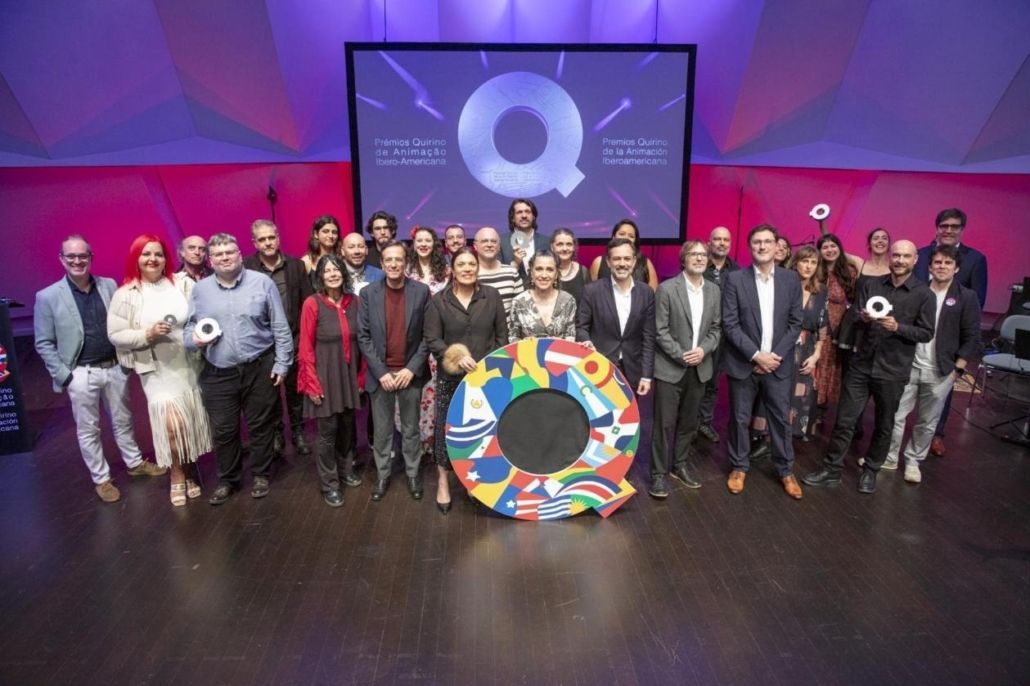
The second Quirino Lab brought together 15 animation executive producers from Spain, Brazil, Peru, Argentina, Colombia, and the Dominican Republic from October 7 to 10 at Lago Martiánez in Puerto de la Cruz (Tenerife).
- 15 Ibero-American animation professionals from six countries gathered for four days at Lago Martiánez in Puerto de la Cruz
- Seven international experts and the first AI hackathon for executive production took center stage in an event built around open-ended questions
- Quirino Lab is an initiative of the Quirino Awards in partnership with the Tenerife Island Council, through Turismo de Tenerife and the Tenerife Film Commission
Puerto de la Cruz (Tenerife), November 6, 2026 – The second Quirino Lab brought together 15 animation executive producers from Spain, Brazil, Peru, Argentina, Colombia, and the Dominican Republic from October 7 to 10 at Lago Martiánez in Puerto de la Cruz (Tenerife).
Over the course of four days, the Lab combined keynote sessions, hands-on workshops, and panel discussions under the theme “Leading the Future of Animation,” with the goal of supporting professional growth, strengthening the industry, and fostering the growth of animation production in the region.
Quirino Lab is an initiative of the Quirino Awards in partnership with the Tenerife Island Council, through Turismo de Tenerife and the Tenerife Film Commission. This second Lab was made possible thanks to the collaboration of the City Council’s Culture Department through its Audiovisual Development initiative, and was supported by Acción Cultural Española (AC/E), through its Program for the Internationalization of Spanish Culture (PICE), as well as by Magnific.
“Back in July, we said that the industry is transforming at a rapid pace. In Puerto de la Cruz, we saw this in every session. That’s why producers left with more questions than answers, but also with an action plan, an expanded network of colleagues, and the conviction that intellectual property and the community are their greatest assets today,” said Silvina Cornillón, Director of the Quirino Awards.
Lope Afonso, Vice President and Councilor for Tourism of the Tenerife Island Council, emphasized that “Quirino Lab represents a firm commitment to talent, innovation, and the development of an audiovisual industry with great potential for Tenerife. We’re talking about a sector that creates economic opportunities, skilled jobs, and diversification for our economy.”
Afonso highlights that “Tenerife wants to continue to be a meeting point for the Ibero-American animation industry, fostering connections among professionals, the exchange of knowledge, and the creation of new projects. The incorporation of artificial intelligence and the debate on intellectual property are proof that our industry is undergoing a major transformation—one in which our island wants to be involved and play a leading role.”
The Vice-President added that “the Island Council, through Turismo de Tenerife and the Tenerife Film Commission, continues to work toward establishing a competitive audiovisual ecosystem capable of attracting talent, investment, and international productions. The continuation of initiatives such as Quirino Lab confirms that Tenerife can contribute significantly to the future of this industry.”
Dimple Melwani, CEO of Turismo de Tenerife, highlights that “the animation sector represents a strategic opportunity to continue diversifying Tenerife’s economy and to position the island as a key hub for the international audiovisual industry. Together with the Tenerife Film Commission and our exceptional local ecosystem, we are committed to initiatives like Quirino Lab, which help attract talent, connect professionals from various markets, and foster the exchange of knowledge and experience.” Melwani adds, “We want to continue contributing to the consolidation of an audiovisual ecosystem that is competitive, innovative, and globally oriented—one capable of generating new business opportunities, fostering creative talent, and showcasing Tenerife’s capacity to host and develop high-value projects on an international stage.”
An Event Built Around Questions
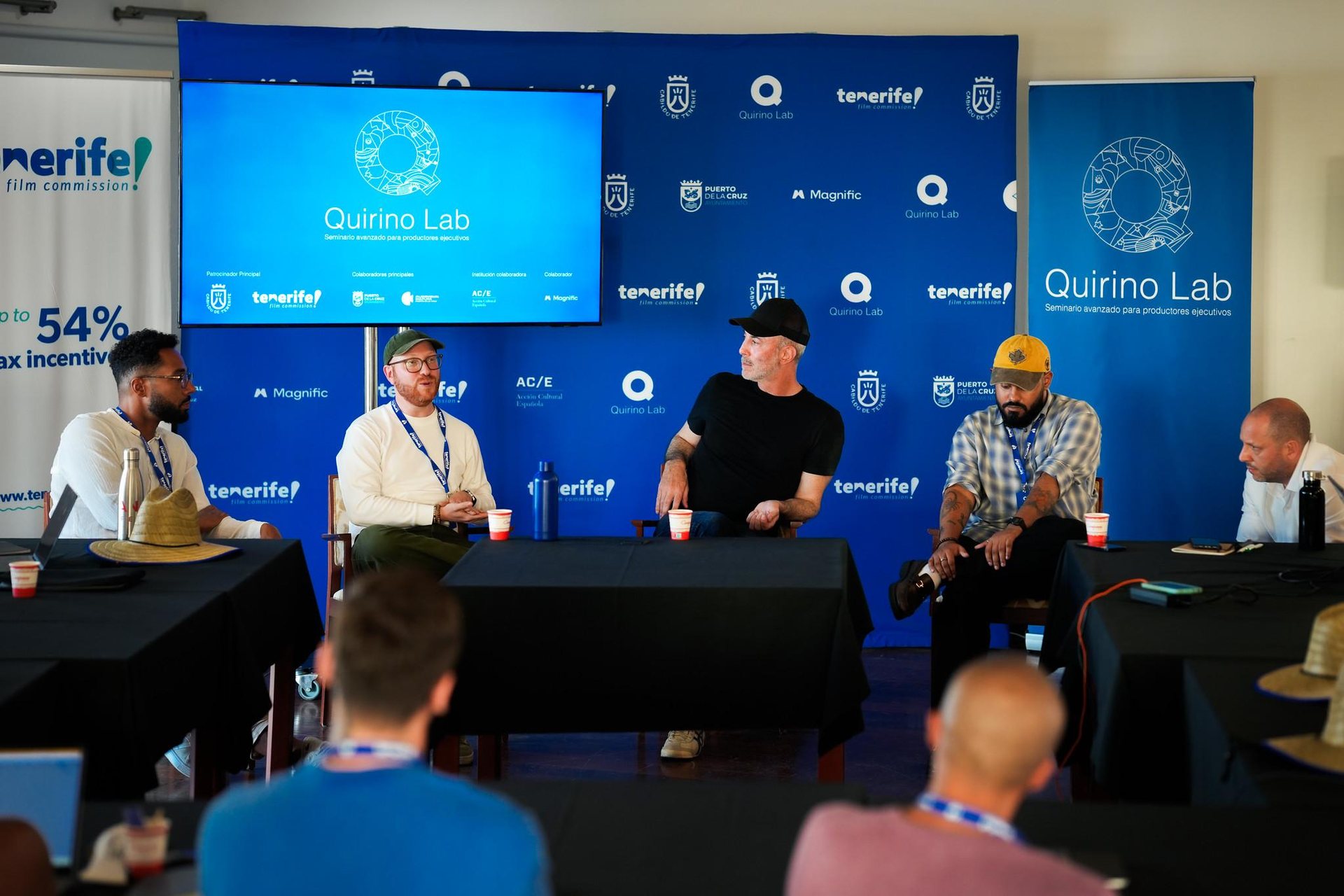
The program brought together seven international experts: Garry Yankson (WLFG Consulting), Nic Cabana (Claynosaurz), Diego Rosner (Nexus Studios US), Lucas Arechaga, Uttariyo Saha (Magnific), Paloma Aragón (Ackermann Labs), and Alby Ojeda (Laboratorio Skip Intro). As a new feature, each session began with an open-ended question rather than a structured presentation, allowing experts and participants to discuss the answers together throughout the day.
The first day concluded with a crisis management exercise in which three teams of participants had to defend a fictional animation project facing budget cuts, cast changes, and impossible demands from their partners. The exercise highlighted the ability of executive production to turn unforeseen events into creative decisions.
Meanwhile, Paloma Aragón, a specialist in personal productivity and project management, led the sessions on strategic team leadership and critical conversations, and guided the Personal Productivity Challenge throughout the week.
From Production Companies to “Value Engines”
Entrepreneur Garry Yankson, founder of WLFG Consulting, urged participants to stop thinking on a project-by-project basis and instead view their production companies as “value engines” capable of generating recurring assets and profits. Yankson argued that intellectual property is a company’s primary asset; he proposed diversifying funding beyond public grants and tax incentives to include private capital, debt, crowdfunding, and partnerships with brands; and he encouraged participants to turn the audience they attract from platforms into their own communities. As an example, he noted that one million views on YouTube can earn around 5,000 euros—the same amount contributed by 1,000 fans who each spend five euros.
In the investor-preparation workshop, each team defined a 90-day action plan centered on three areas—people, technology, and finance—with a review of results scheduled for January 2027. The session on financing addressed alternatives for the development phase, such as profit-sharing with the creative team or validating intellectual property through merchandising before production begins.
The Community as New Infrastructure
Nic Cabana, co-founder of Claynosaurz and a veteran of productions such as “Game of Thrones” and “Paddington 2,” shared how the transmedia brand has grown independently over the past four years to surpass one million followers, 2 billion views, and 15 million dollars in revenue—according to his data—without having to rely on big-studio backing. “The community is the new infrastructure,” said Cabana, who advocated for developing projects in full view of the public, involving fans in the creative process, and testing ideas with short-form content before committing large budgets.
Along the same lines, Lucas Arechaga, a content strategy specialist with over 20 years of experience at companies such as WarnerMedia, Hasbro, and Entertainment One, analyzed crowdfunding as a tool for financing and audience validation. Of the 20 animation cases studied during the session, 16 had some form of prior backing, whether it was a product, the creator’s reputation, or a fan community. Arechaga emphasized that platforms buy audiences, not just projects, and that what buyers are after is solid proof of interest, not promises of transmedia potential. In his session on audiences and digital fragmentation, he highlighted that the audience has not grown smaller, but its behavior is changing faster than business models, pointing to YouTube as a testing ground for validating intellectual property before making the leap to other channels.
From Nexus Studios, Diego Rosner explained how the studio has taken animation beyond the screen, into venues such as the Sphere in Las Vegas or the show “ABBA Voyage”. He also discussed how real-time engines and reusable assets have allowed the studio to expand into multiple formats for projects like Gorillaz’s. Rosner championed a future of animation led by artists, centered on their skills and supported by artificial intelligence—a future in which pre-production remains the phase that must not be compromised.
Artificial Intelligence: From the Art of Description to the First Hackathon
Uttariyo Saha, a Creative AI Consultant at Magnific, presented hybrid workflows that combine hand-drawn illustrations and video generation, and championed the “art of description” over simply writing instructions. Saha emphasized quality control, visual consistency through reference sheets, traceability of each generated asset to protect intellectual property, and the requirement to disclose the use of AI as mandated by European regulations. He also shared a five-step framework for studios to begin incorporating these tools, ranging from single-phase trials to measuring the cost of each iteration.
The final day featured Quirino Lab’s first hackathon, led by Alby Ojeda, director of the Skip Intro Lab, in which participants designed AI assistants and agents for executive production, such as a grant analyst with agents specializing in legal matters, accounting, funding schedules, and layout design. Ojeda explained that, with a prepared workflow, he was able to produce the paperwork for three grant applications in an hour and a half. According to a survey taken among participating studios, half of them already routinely use AI for development tasks such as brainstorming, dossiers, and synopses.
Ojeda also placed emphasis on ethics: transparency with teams and the public, voluntary use of generative tools, and protection of wages. “In a world where there will be many companies producing massive synthetic content, the only value a company will have is its artistic vision,” he stated.
The Animation Industry in Ten Years
The open panel discussion on the future of the sector agreed that AI will lower production costs and expand the content offering, thus increasing the value of creative judgment, direct engagement with the audience, and brand ownership. The speakers noted that distribution will change more than production, that content created by people may become a category in its own right, and that independent studios, being lighter on their feet than large companies, have an opportunity to experiment with new formats. They also warned about the risk to young talent if AI replaces the tasks with which professionals begin their careers.
A Community Moving Forward
During the closing session, participants highlighted the Lab’s welcoming atmosphere, the camaraderie, and the opportunity to share experiences with colleagues from other countries.
The group of participants included producers from Red Animation, Crazy Meerkat, Surfing Giant, Tomavision Studio, Oceanika Estudios, and Studio Kimchi (Spain); Espacial Filmes, Rapadura Atômica, Split Studio, and Pinguim Content (Brazil); Tunche Films (Peru); 80 Mundos, Damita Joe, and Ginevra Films (Argentina, Spain, and Italy); and iKartoons Animation (Colombia and the United States).
Quirino Lab also brought animation to Puerto de la Cruz with two screenings of Ibero-American short films from the Quirino Awards: one session for institutes on October 6 and another open to the public on October 8.
The Animation Industry in Tenerife
With this second Lab, Tenerife reaffirms its commitment to the development of the animation industry on the island. In 2024, animation brought in 19 million euros in Tenerife, accounting for 32% of the island’s total audiovisual sector revenue. Tenerife has also hosted the Ibero-American Animation Quirino Awards since their first year in 2018.